
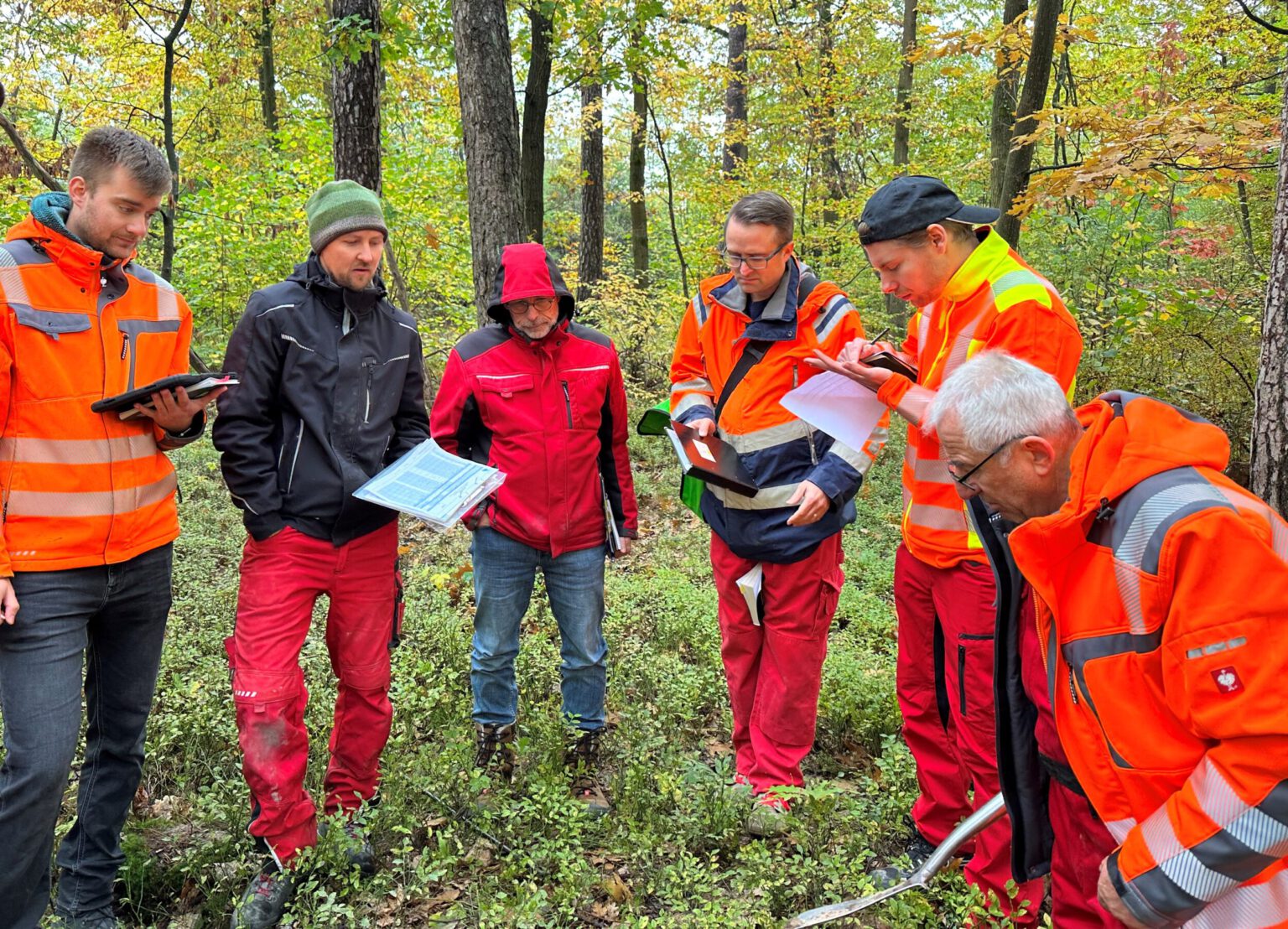
On October 18 and 25, 2023, a group from the LGA team was trained in the preparation, execution, and documentation of soil assessment according to KA5. The training was led by our former colleague, Dr. Kunibert Eberlein, an expert in soil science, who has been appointed as an expert for soil mapping by the former Bavarian Geological State Office. The training locations were the clay pit Guggenmühle near Allersberg and a forest area near Buchenbühl.
Soil assessment is an important tool in soil investigation. Soils are described and classified based on various properties and parameters. To ensure the comparability and reproducibility of results, the Soil Mapping Guide, now in its 5th edition (KA5), is used as the standard for soil assessment. The Soil Mapping Guide first appeared in 1965 as "The Soil Map 1: 25,000. Instructions and Guidelines for its Production." The KA5 is not only used in scientific soil mapping but is also required by various legal regulations (e.g., Federal Soil Protection and Contaminated Sites Ordinance, BBodSchV). Thus, soil profiles must be recorded and documented as part of preliminary contaminated site investigations, detailed investigations, and remediation investigations.
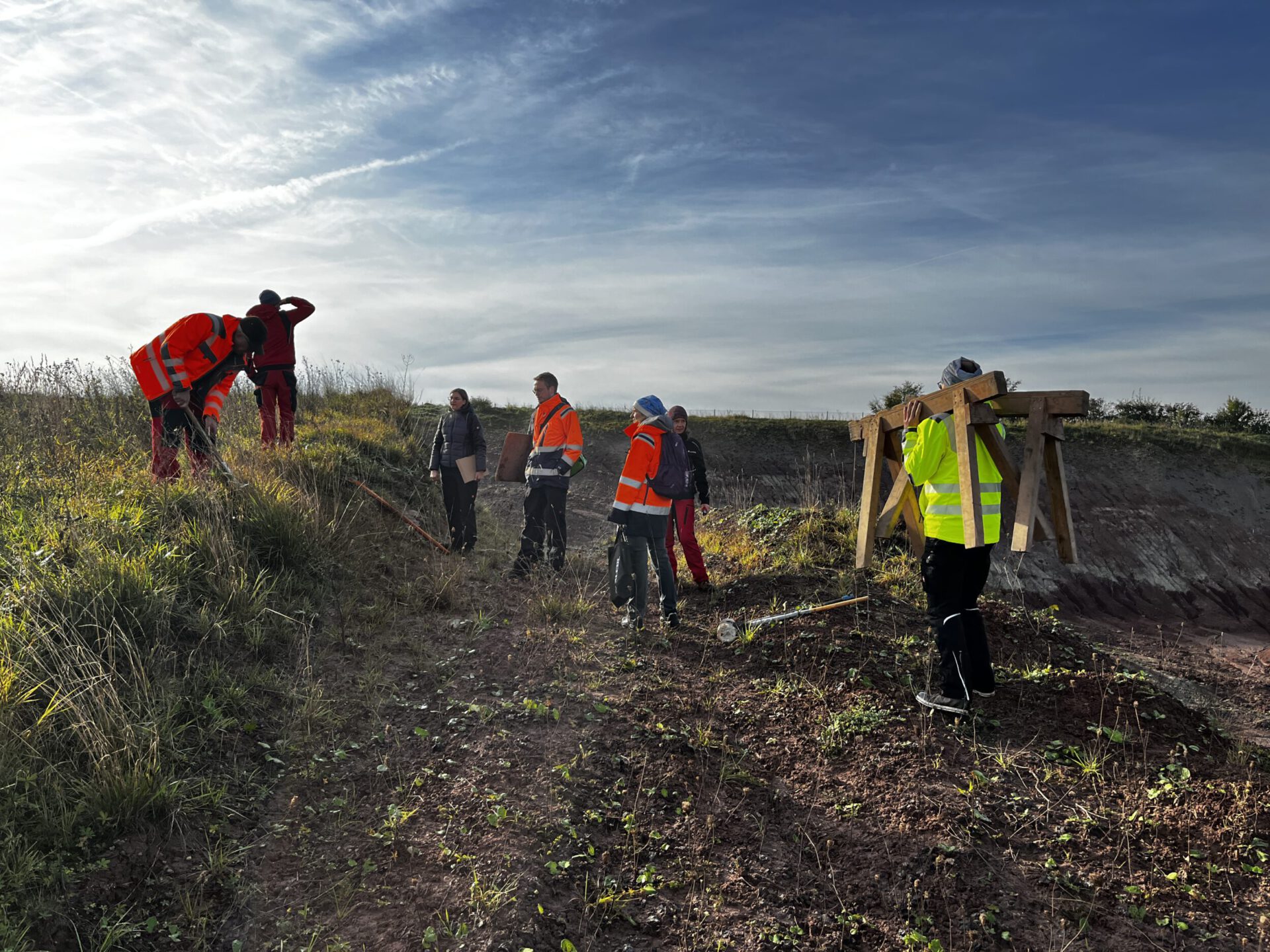
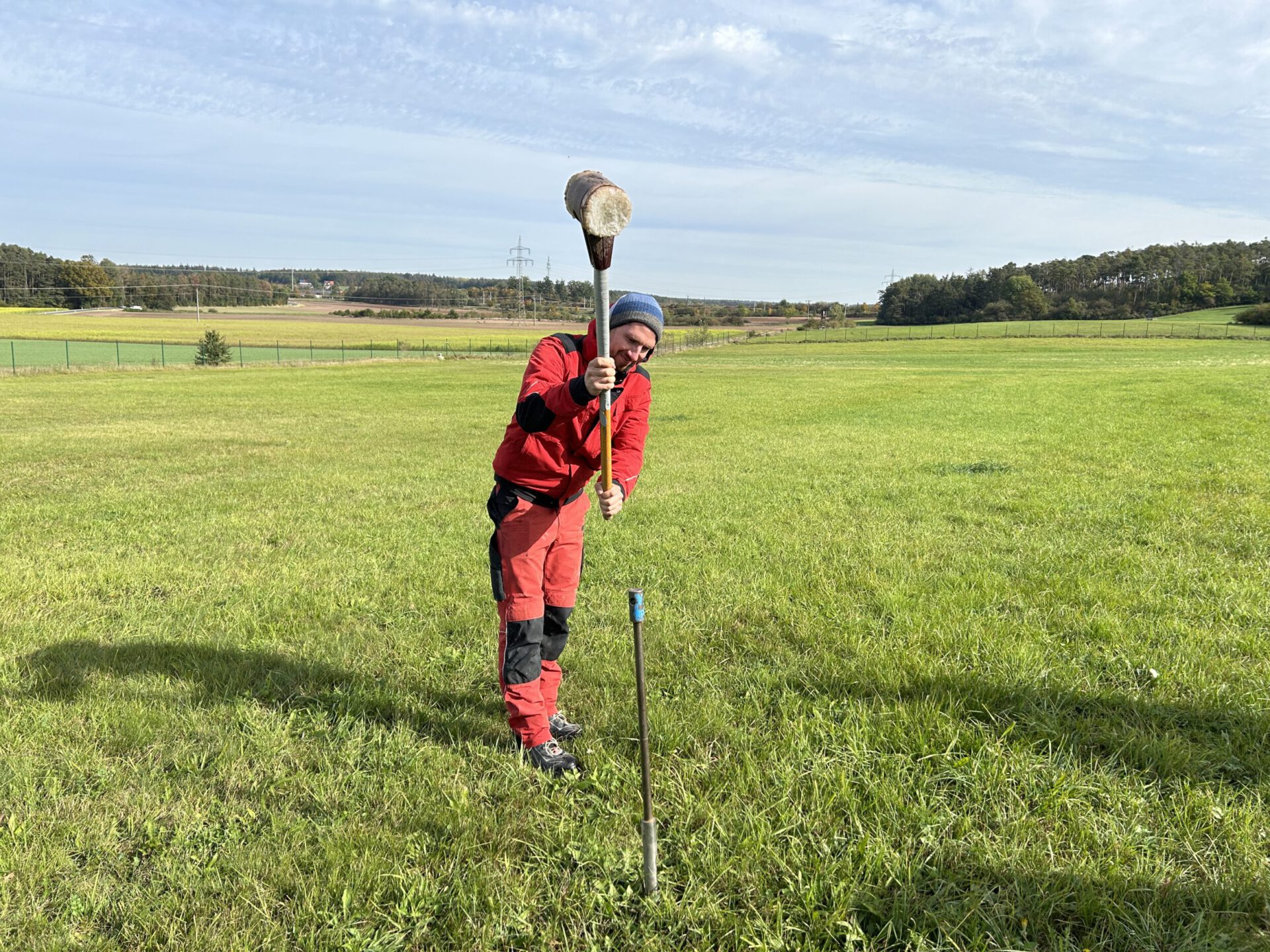
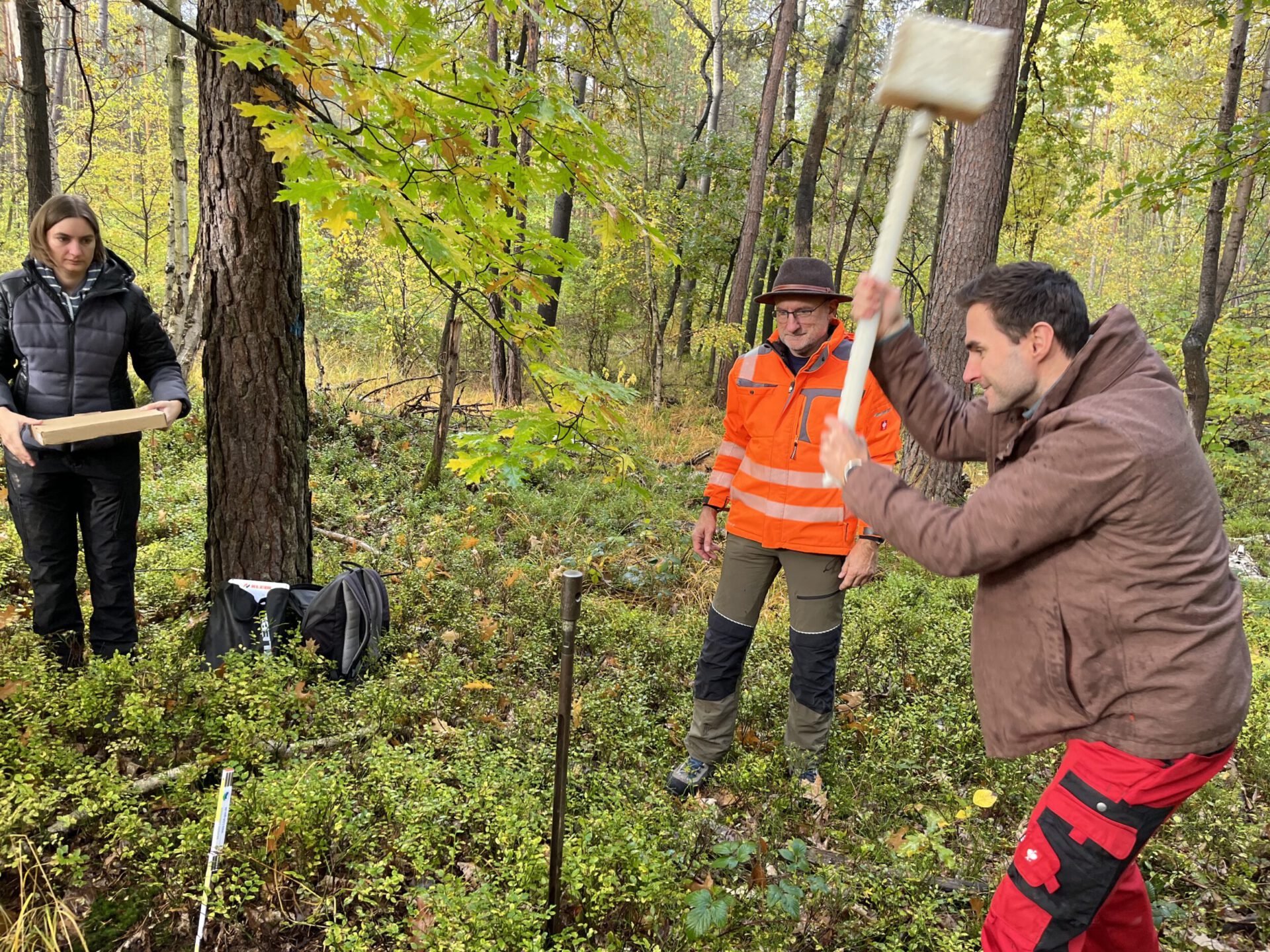
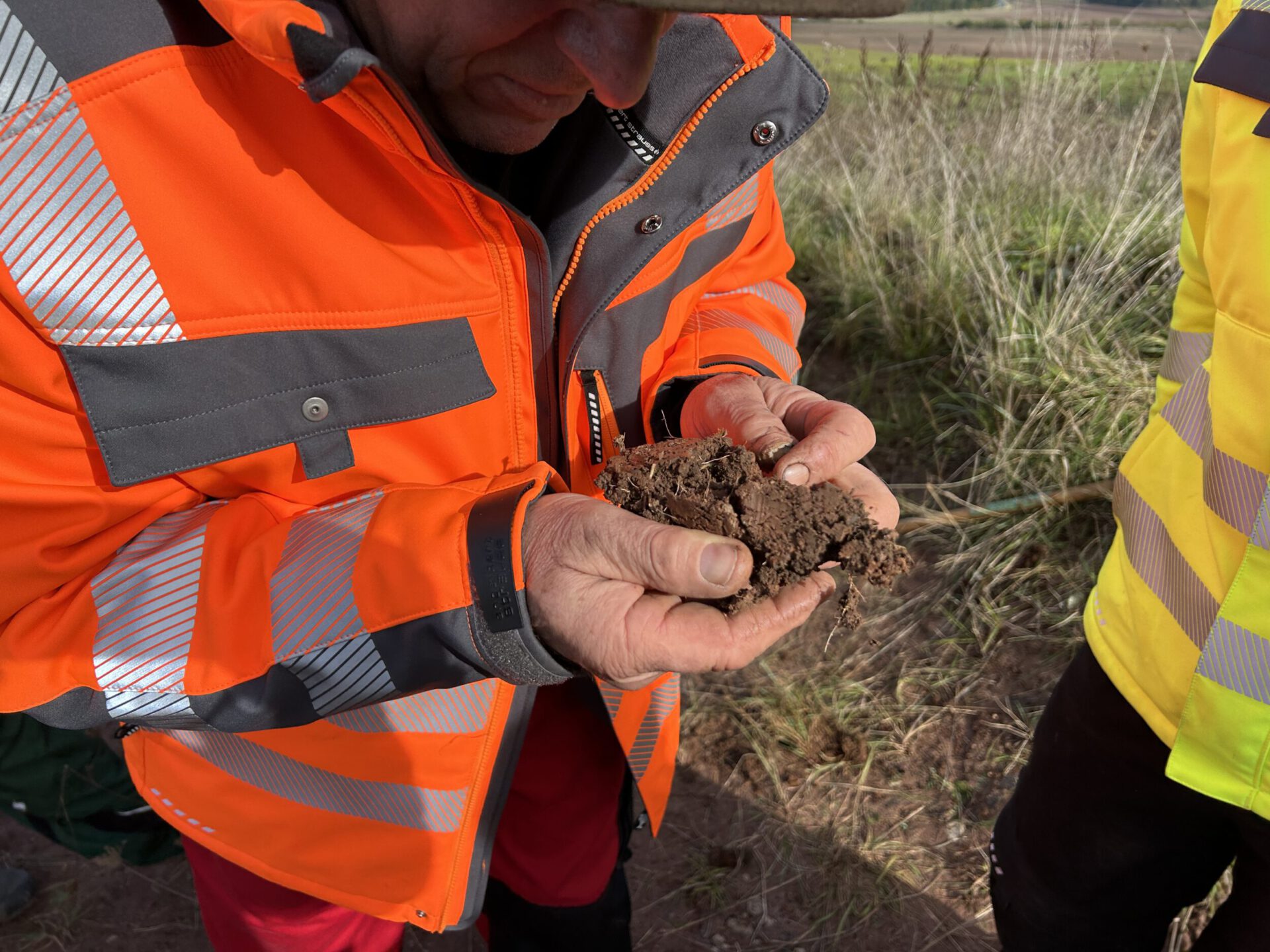
During the one-day field training, soil cores were initially extracted using a Pürckhauer auger, and small pits were dug to expose the local soil profile. Participants then conducted soil assessments for each soil unit (e.g., finger test, determination of soil color, and substrate description) according to the KA5 guidelines and recorded their observations on a corresponding form. Kunibert Eberlein explained each step and provided practical tips. The results were extensively discussed within the training group. Thanks to the training, the LGA team was able to deepen its knowledge of soil assessment according to KA5. We thank Kunibert Eberlein for his valuable support.