
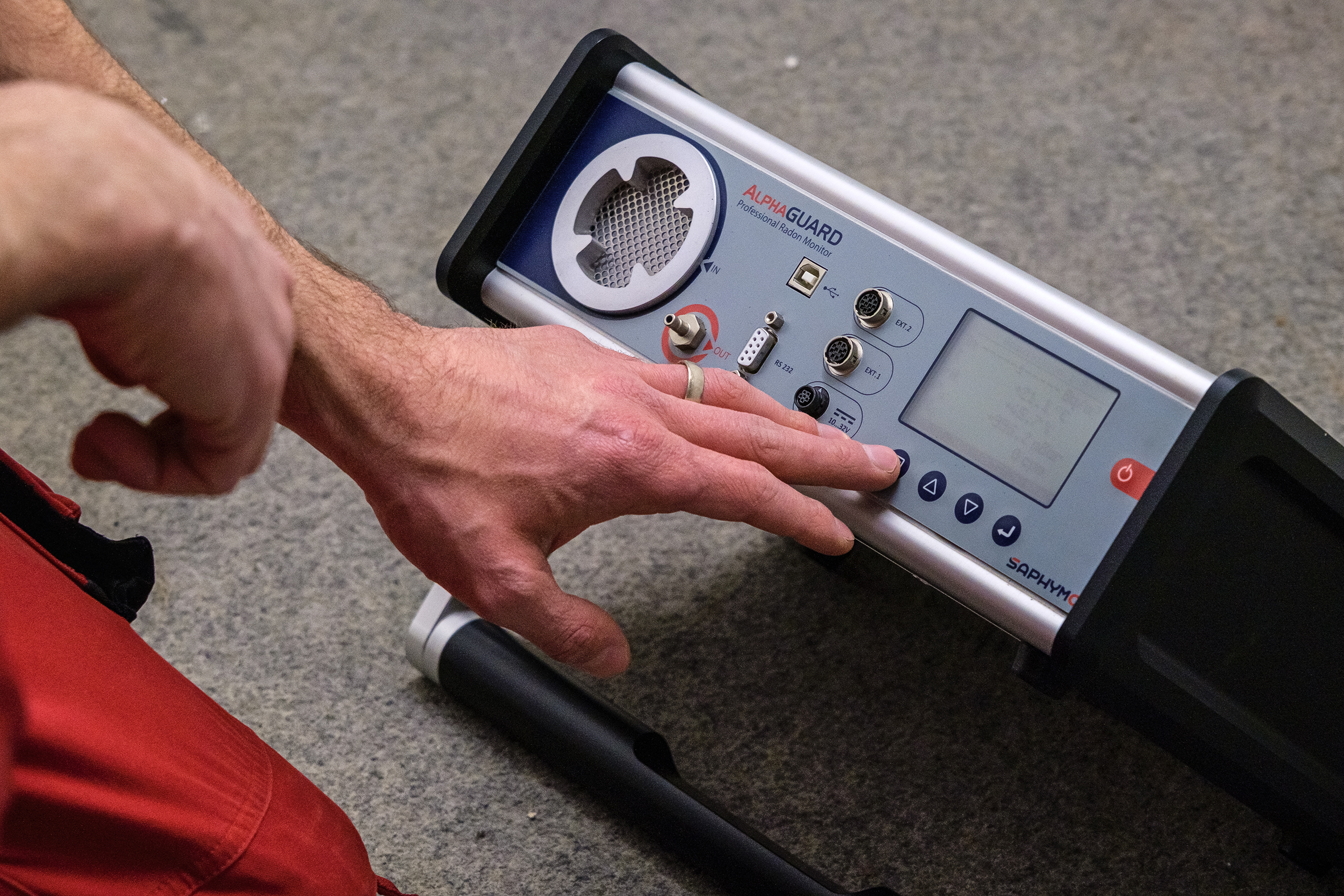
Only a measurement provides certainty
In designated radon precaution areas and for activities in so-called radon workplaces, you as the workplace manager may be required to conduct measurements. If the legally established reference value of 300 Bq/m³ on an annual average is exceeded, measures must be taken to reduce the radon activity concentration in the indoor air.
Whether the reference value has been exceeded and whether there is a radon problem with a health risk depends on many factors and can only be clearly clarified by measuring the radon activity concentration. We offer measurements for a wide range of issues.
Long-term measurements in accordance with the requirements of radiation protection legislation are used to determine whether measures are required to reduce the radon activity concentration. At the same time, time-resolved overview measurements can be used to obtain information on concentration behaviour. This enables an immediate response to an existing health hazard.
Your advantages
The LGA is recognised by the Federal Office for Radiation Protection (BfS) as a measuring body for workplace measurements in accordance with § 155 of the Radiation Protection Ordinance. This allows us to offer you quality-assured measurements of radon activity concentration.
How much radon can enter a building depends on many factors: in addition to the radon activity concentration in the soil air, the geology and the condition and construction of the building are decisive.
As a geological institute with § 18 experts according to the Federal Soil Protection Act (BBodSchG) and experts for building pollutants, we have detailed knowledge of every influencing factor for the existence or development of a radon problem. Customised solutions can therefore be developed for you in a targeted and cost-effective manner.
Our services
- Long-term measurements of the radon activity concentration in indoor air in accordance with Section 127 of the Radiation Protection Act by a recognised measuring body for workplace measurements in accordance with Section 155 (4) of the Radiation Protection Ordinance
- Definition of measures to reduce the radon activity concentration
- Control measurements after successful implementation of measures
- Time-resolved overview measurements
- Soil investigations (measurement of radon activity concentration in the Soil air)
- Advice on precautionary radon protection for new buildings
- Project management, construction supervision
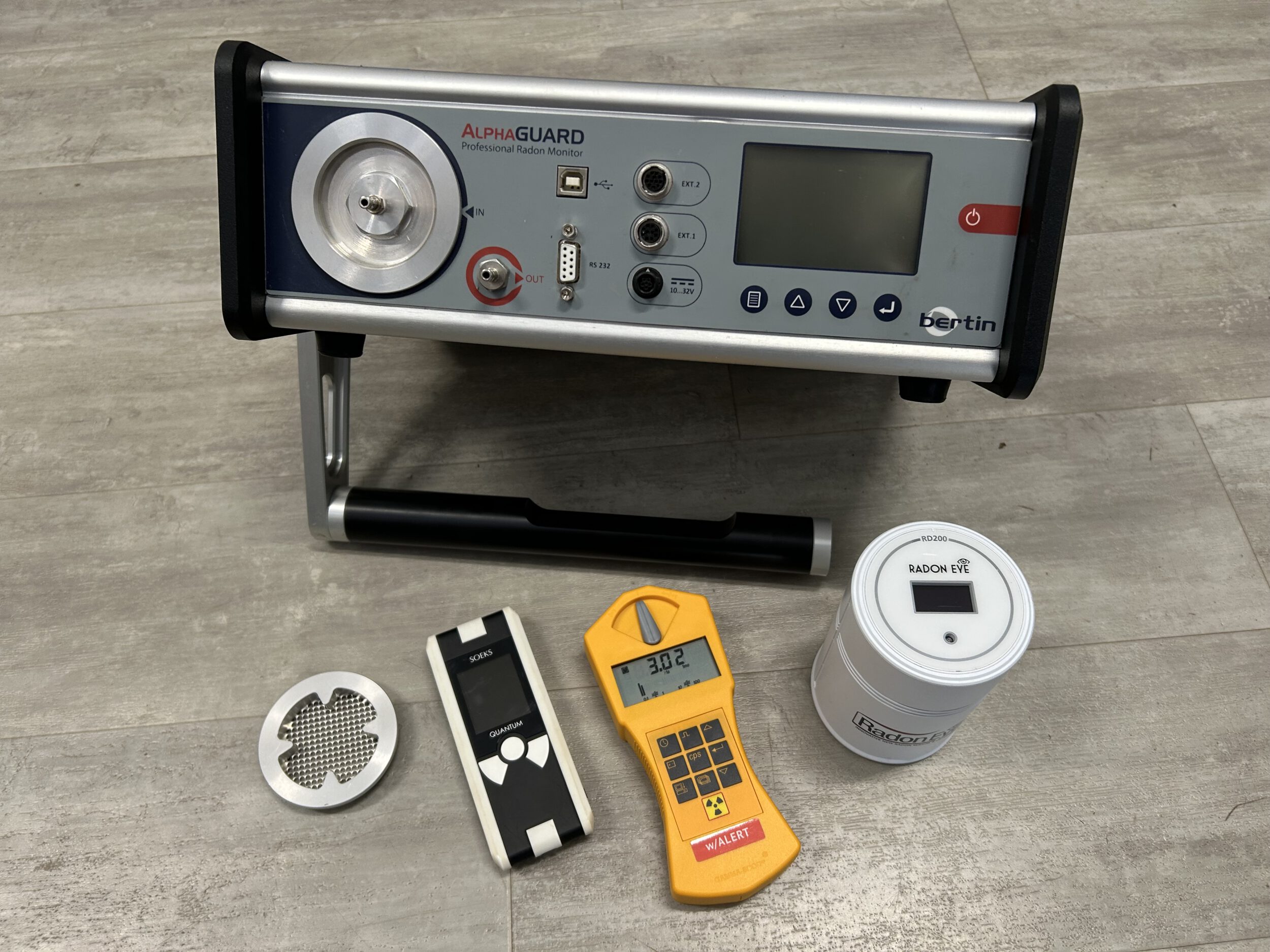
Our competences
-
recognised measuring point in accordance with § 155 of the Radiation Protection Ordinance (StrlSchV) for workplace measurements
-
Certified radon expert (Bauakademie Sachsen)