
The beer cellars of the Upper Franconian tunnel system were originally intended to be examined using the proven method: an engineering geological assessment of the rock quality combined with a detailed survey of the tunnels and the ground surface to determine the overburden. When these data sets are combined, the stability of the tunnels can be reliably evaluated. But what can be done when the tunnels are not accessible for safety reasons?
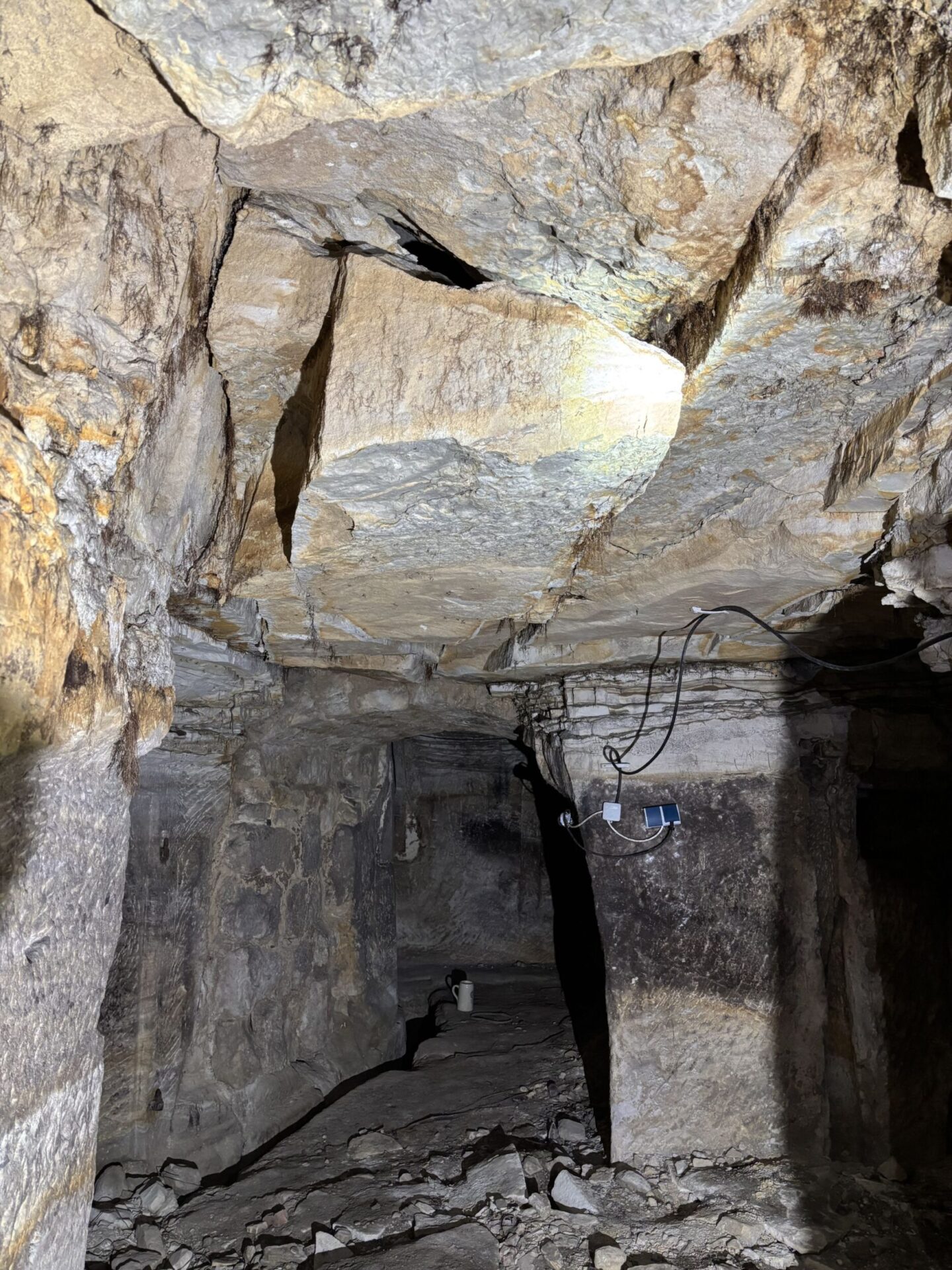
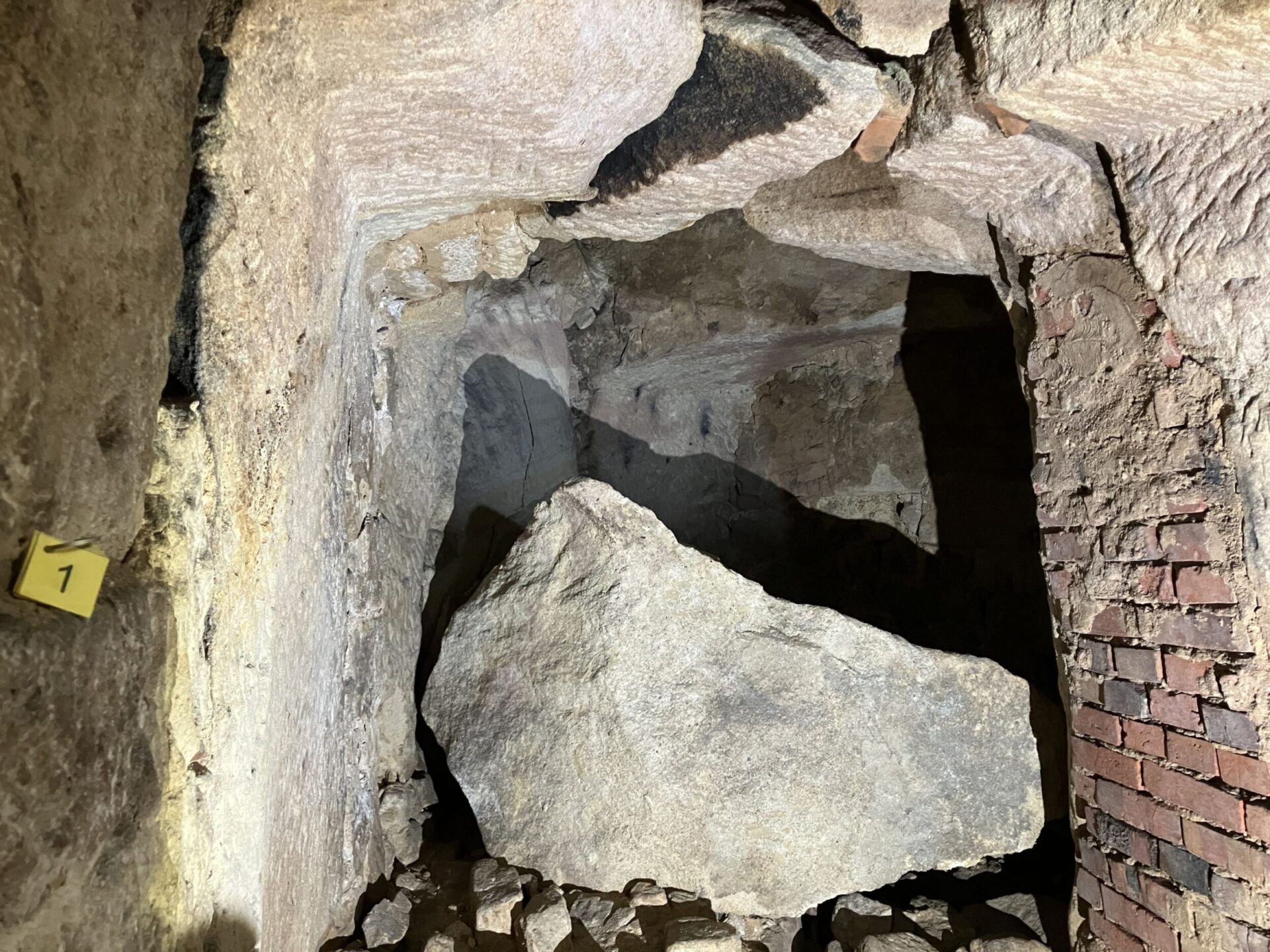
During the initial overview of approximately twenty beer cellars at the start of the project, it quickly became clear that an alternative to the traditional on-foot inspection was necessary. Project manager Joschka Wischer identified several areas in six cellars that could not be safely accessed by geologists or surveyors. Massive fractured blocks hanging from the ceiling and numerous fallen blocks on the floor indicated an acute risk of rockfall and recent collapse activity. A physical inspection and survey of these sections was not feasible, yet they were crucial for assessing structural stability. In other sections, large quantities of bulky stored items made access extremely difficult and would have required significant additional time.
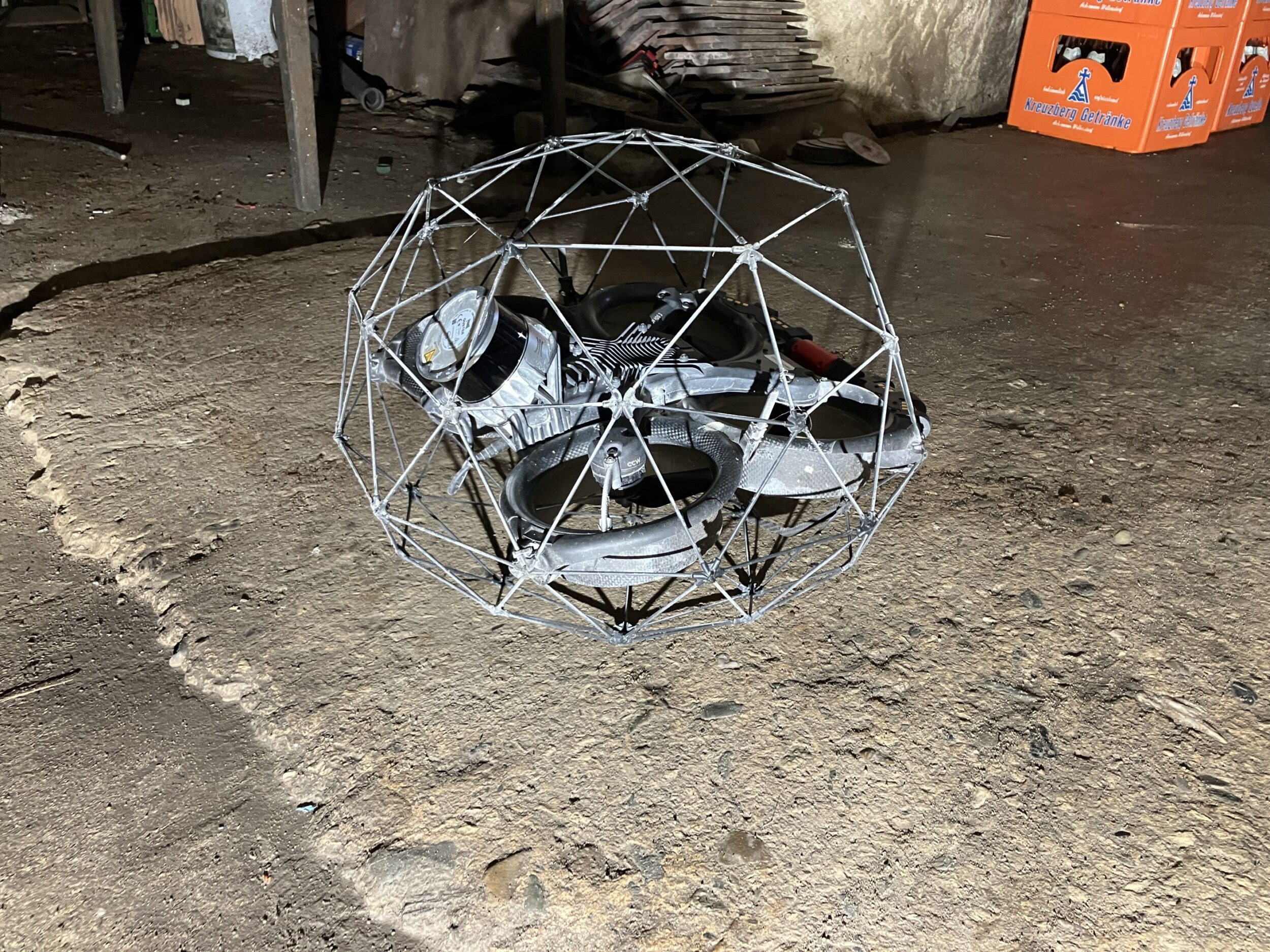
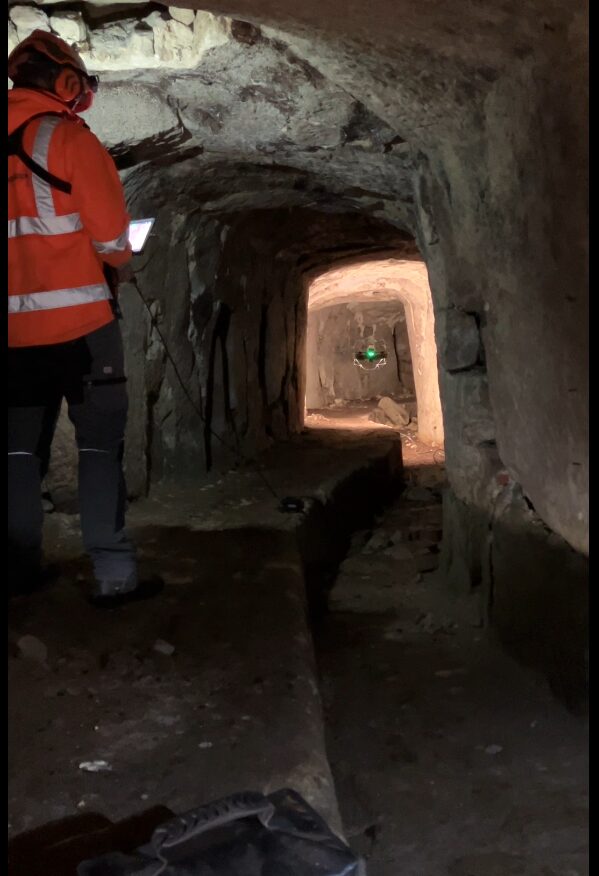
The solution: flying a drone through the hazardous sections. Protected by a cage, the drone captured video and scanned the relevant areas in one to two flights per cellar. Including setup, takedown, and battery changes—each lasting about five minutes—the effort per cellar amounted to roughly half an hour, depending on the size of the restricted zones.
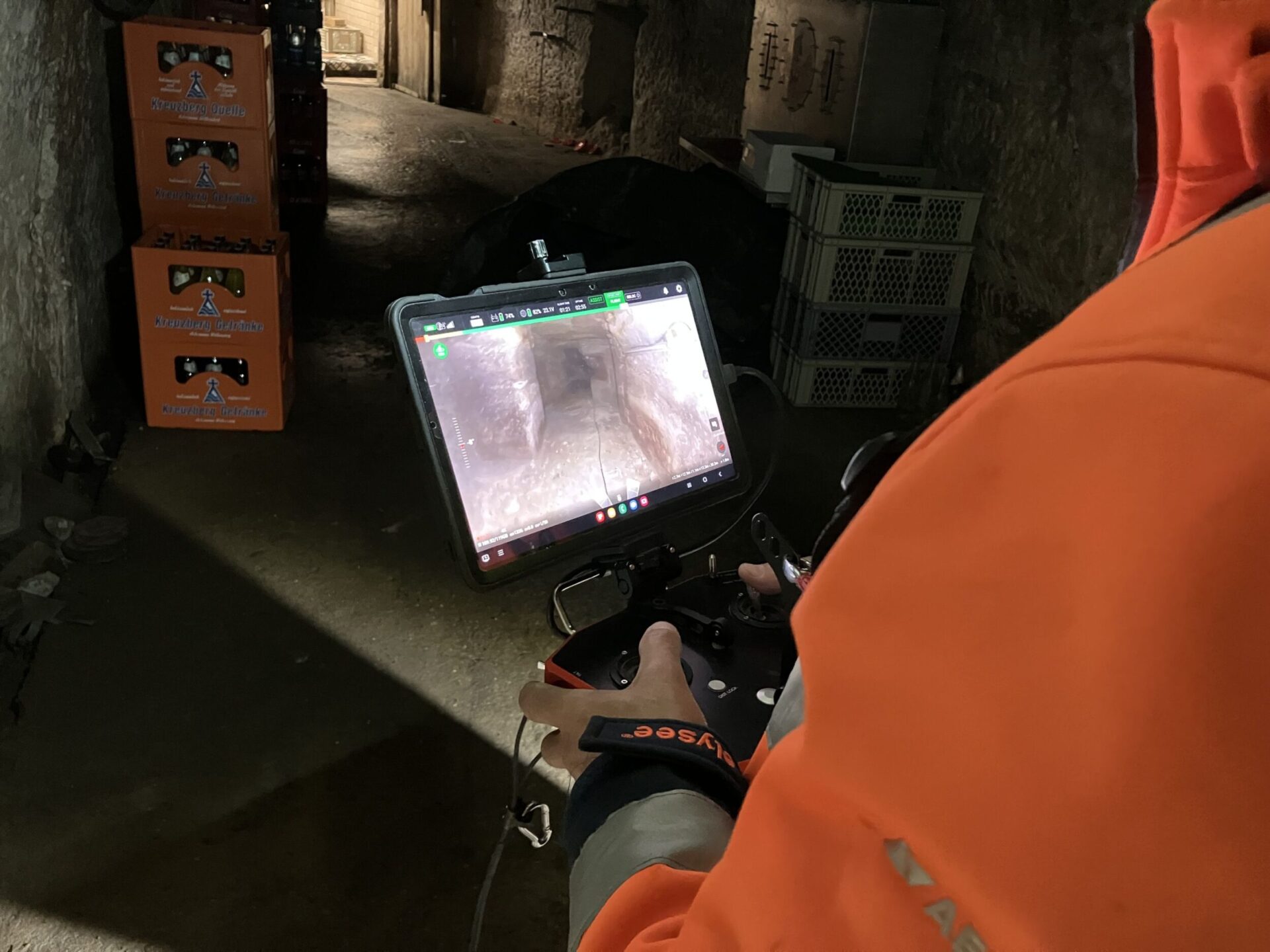
One particular challenge was maintaining the drone’s signal within the underground tunnel system. To improve reception, a wired transmitter was carried as far as possible into the tunnels and, in some cases, pushed through hazardous sections using rods. Every additional meter gained was valuable, as the signal tends to drop when the passages curve too sharply or when the tunnel network branches extensively.
The result speaks for itself: high-resolution point clouds that accurately represent the tunnel geometry and even reveal fracture planes, along with several hours of video footage that allow mapping of previously inaccessible cellar sections. The pilot project “Drone Survey in Beer Cellars” can be considered a success.