
THE INSTRUCTIVE HISTORY OF PFAS USE AND HOW LGA-GEO FIGHTS ITS LEGACY
What a miracle substance: a man-made chemical compound with countless useful applications. The coating of the Teflon pan that hardly allows anything to stick, enabling low-fat frying; all-weather clothing, breathable and waterproof; waterproofing spray for winter shoes; even the butcher's coated paper that kept the ham tasty and fresh for a long time; the pizza box – all of these were PFAS-coated.
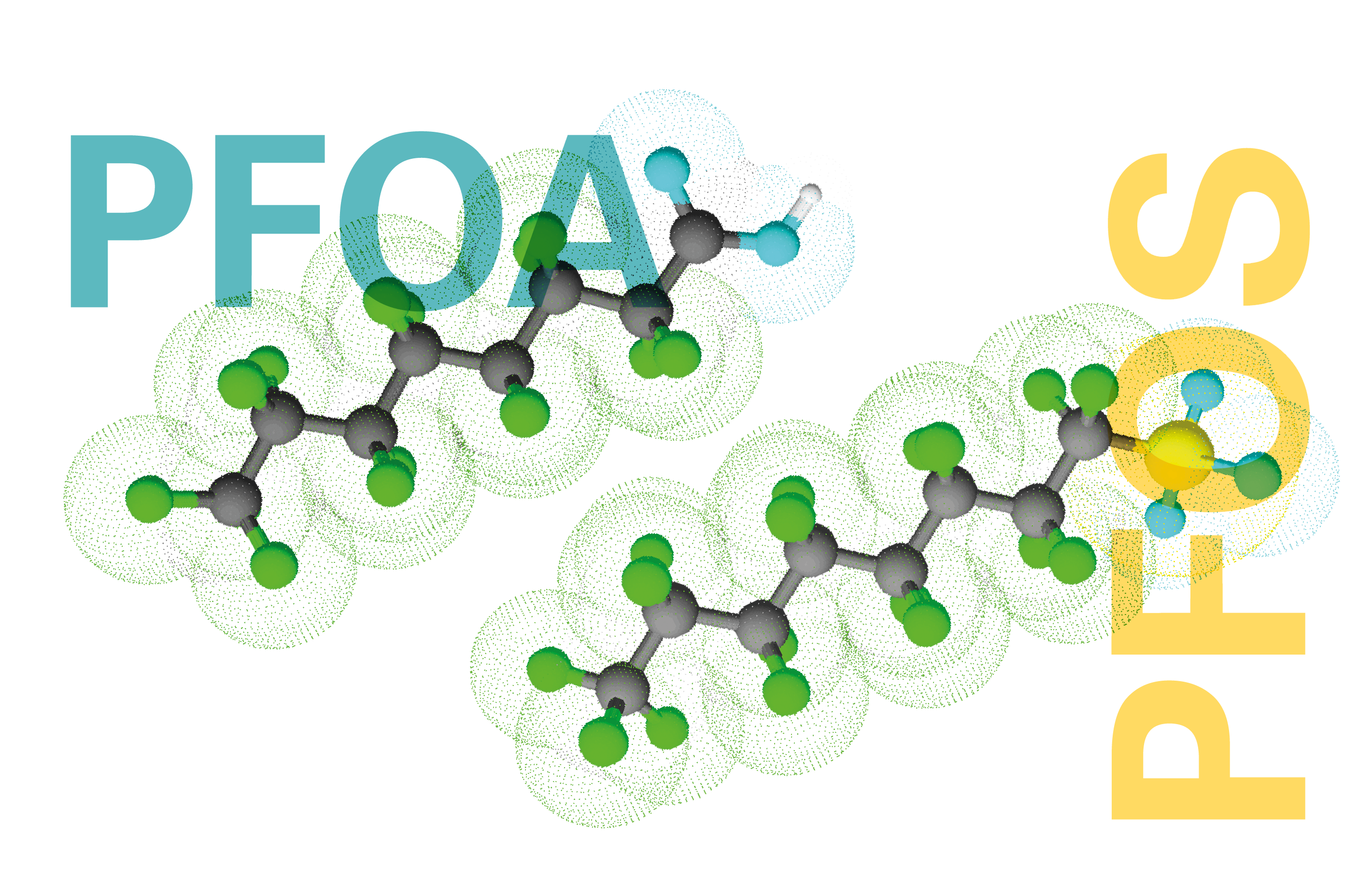
About 80 years ago, when chemists at DuPont and 3M discovered the substances perfluorooctanoic acid (PFOA) and perfluorooctanesulfonic acid (PFOS), which belong to the PFAS group, they believed in a miracle that allowed countless marketable applications. And so it was – at first. They were used in paints, leather and textile coatings, shoes, carpets, packaging, ski wax, floor and car care products, as well as in the production of papers with dirt-, grease-, and water-repellent properties, and as components of waterproofing and lubricating agents.
"Halogens are extremely reactive, and the combination of a halogen (fluorine, chlorine, bromine, ...) with a carbon is the most stable there is," explains Carlo Schillinger, geologist and managing director of LGA Institute for Environmental Geology and Contaminated Sites GmbH (LGA-geo.de). The halogens, for example, attach to carbon chains instead of hydrogen molecules, and the resulting compounds are water-loving at one end and fat-loving at the other, very stable, hardly degradable, and only destructible with extreme heat (hence often used as firefighting foam at airports or on military sites).
A brief chemistry lesson on halogens:
"Halogens constitute the 7th main group of the periodic table. They include the elements fluorine, chlorine, bromine, iodine, and the rarest naturally occurring element, the radioactive astatine (a decay product of uranium). Halogens are nonmetals and form diatomic molecules in their elemental state, whose volatility decreases with increasing atomic number. Because halogen atoms need only one electron to achieve noble gas configuration, they react easily by gaining electrons. Due to their high reactivity, they occur in nature only in the form of their compounds."
Source: from the encyclopedia lernhelfer.de
"Unfortunately, good and bad are very close together here," explains geologist Hendrik Belz, who specializes in the detection and removal of environmental toxins at LGA-geo. "PFOS substances are suspected of being carcinogenic. There are more than just PFOA and PFOS, namely over 4000 to 8000 PFAS compounds, and it is not known what specific health-destroying effects they all have." The safety thresholds have been lowered for years as research progresses. In addition to carcinogenicity, PFAS is suspected of having hormonal effects – a killer in nature and the environment. It is feared that it could be responsible for reduced vaccine efficacy, increased cholesterol levels, thyroid diseases, and reduced fertility. And what made the compound so useful is now the crux in trying to get rid of it: "Small soil contaminations reach the groundwater, they can hardly be filtered out and destroyed. They get everywhere in tiny traces, and that's enough to cause harm," says Belz. PFAS has been detected in the liver of polar bears in the Arctic Circle, and tiny amounts are enough for harmful effects; "a sugar cube in the reservoir," as Belz vividly describes the danger. "The accumulation chain is the problem," explains the young geologist, "from the soil into the water, from the water into the carp..."
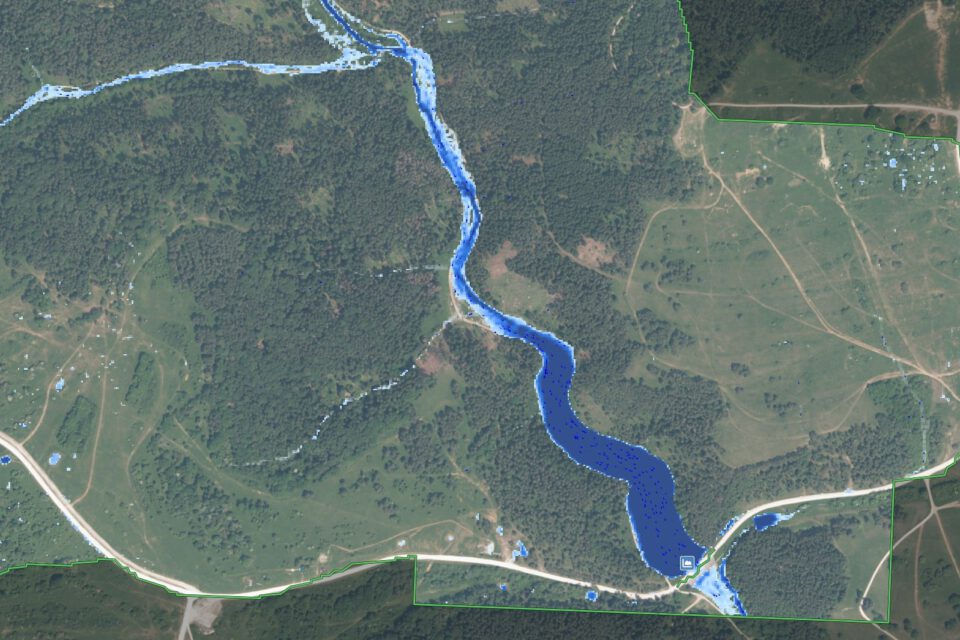
The specialists at LGA-geo never run out of work; when it comes to land sales, the soil safety expertise has long become routine. Investigations, aerial photo analysis, drilling, historical research, sample examinations – true PFAS detective work is needed. And where this devil's stuff is detected, it gets expensive. The soil must be removed and disposed of as "hazardous waste." The only way to get rid of it is through extraction via soil washing or activated carbon filters. Alternatively, the contaminated soil must be incinerated at extremely high temperatures, over 1000 degrees. In times of sustainability concerns, this is not a practical solution either... One wonders why this devil's stuff hasn't been banned long ago? "The use of PFOS has been largely banned in the EU since 2006 and that of PFOA since July 2020, but since there are so many compounds, the chemical industry has many alternatives," says Belz with a shrug. It is a decision of reason against profit, a fight against windmills.