
LGA INSTITUTE FOR ENVIRONMENTAL GEOLOGY AND CONTAMINATED SITES PROVIDES SAFETY IN CASES OF DOUBT
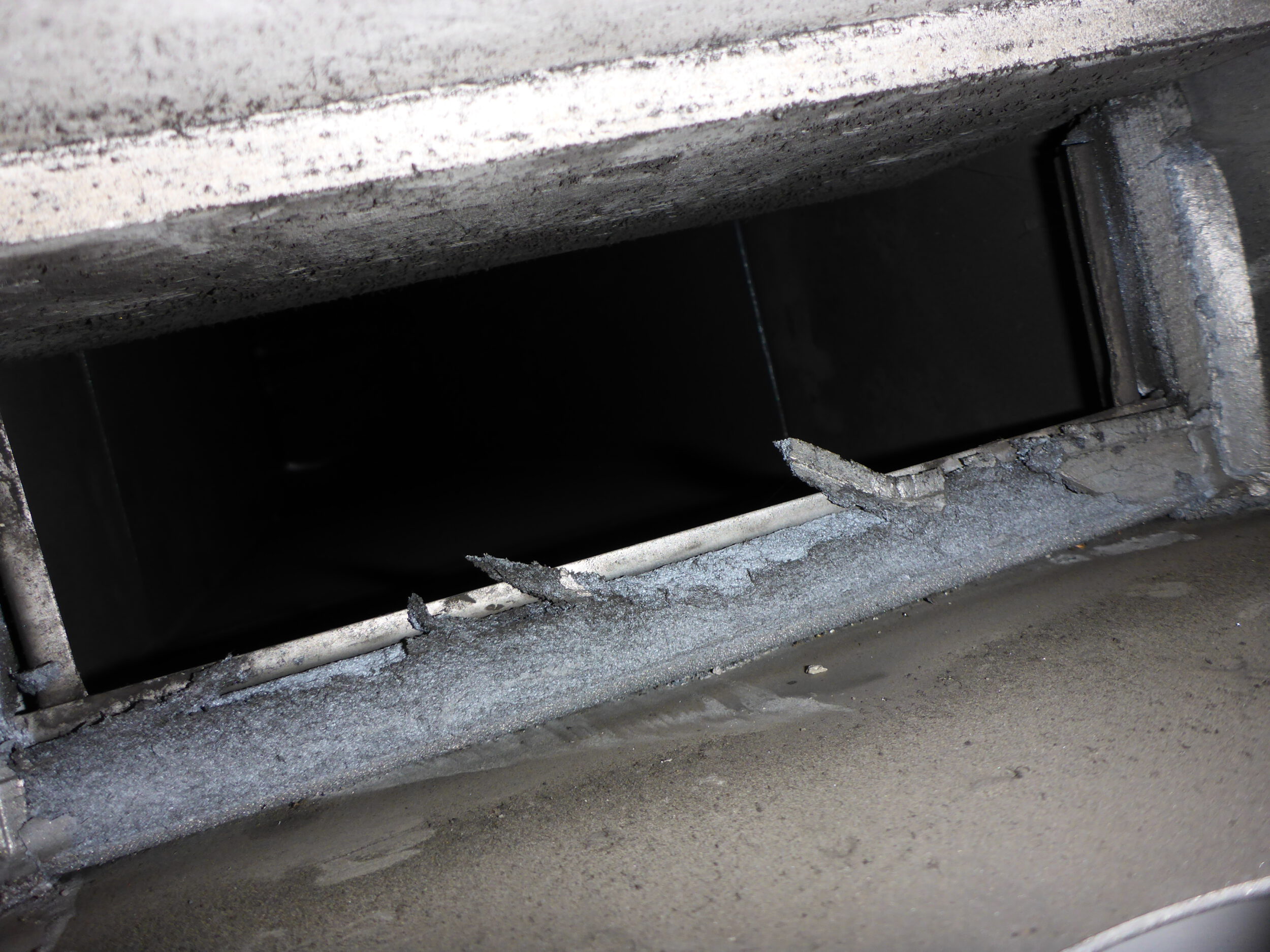
Due to its very good technical properties, asbestos was used in fire dampers until the end of the 1980s. In addition to the damper blade itself and – depending on the manufacturer – other components, the sealing gaskets were mainly made of an asbestos-containing foam (product name "Litaflex").

All these components are classified as "weakly bound asbestos products" according to TRGS 519. This means they can release asbestos fibers, which can enter the human body through inhalation and cause fatal cancers. After the health issues became known in the late 1970s, the legislator gradually banned the use of asbestos products in construction. For existing buildings, all owners were required to have the need for remediation professionally assessed based on the Asbestos Directive. When introduced in 1989, the Asbestos Directive generally classified asbestos-containing fire dampers in Urgency Level III. In plain language: A "re-evaluation is required in the long term" – that is, at most after five years. This did not imply an immediate need for remediation, as it was assumed at the time that the damper blades and seals were undamaged.
Today, many of the old asbestos-containing fire dampers are still in operation. Even the "newest" asbestos-containing fire dampers are now 30 years old, many much older. This raises critical questions: Often, the asbestos foam deteriorates and is further destroyed each time the damper is activated. In addition to the limited fire protection effectiveness, measurements have shown that such damaged fire dampers can release high amounts of asbestos fibers into the ventilation system when activated (when the blade strikes the seal). Furthermore, people who inspect and maintain the dampers can be exposed to excessive fiber concentrations. This has been clearly demonstrated by workplace measurements conducted by the LGA Institute for Environmental Geology and Contaminated Sites and other institutes.
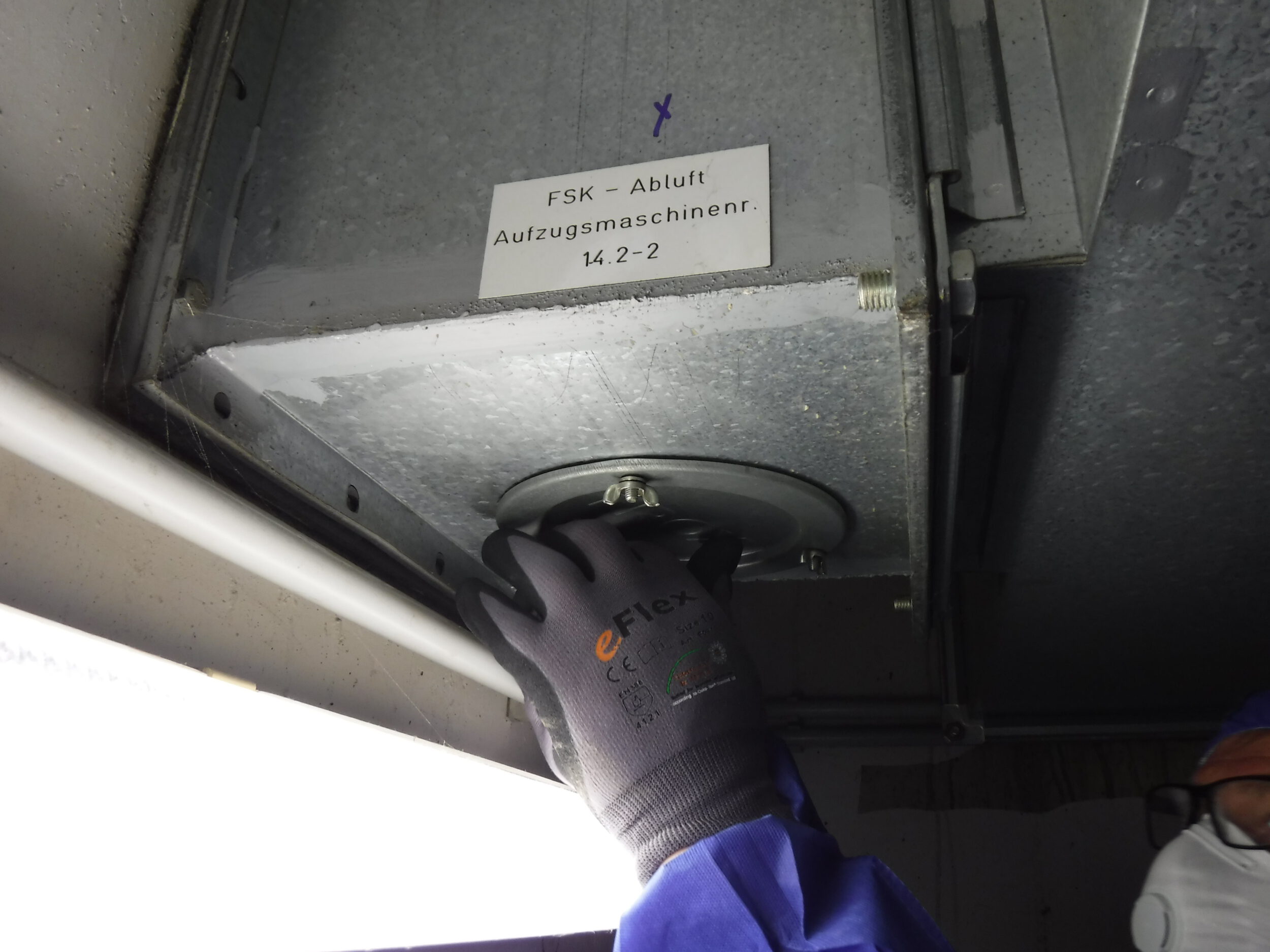
This means that maintenance in the usual form would only be possible under the provisions of TRGS 519 (inspection only by an asbestos expert, enclosure, access lock, personal protective equipment). Procedures must be developed by the expert in coordination with the occupational safety authorities. Consequently, a general classification of fire dampers without individual inspection is no longer suitable for identifying and averting potential hazards to users. The state of the art today is an individual assessment of the fire dampers regarding their condition by an asbestos expert. The goal of the individual assessment is to prioritize the replacement or remediation of the dampers based on damage categories. In very poor condition ("Damage Category 1" – high risk of fiber release), contact samples of settled dust in the ventilation system are recommended to assess possible fiber dispersal and thus potential hazards to building users.
Affected businesses can still be helped promptly and sustainably: The LGA Institute for Environmental Geology and Contaminated Sites, with its "Inspection Office for Contaminated Building Materials and Construction Waste," inspects fire dampers for asbestos content and assesses their condition. If necessary, they receive remediation recommendations. The LGA Institute for Environmental Geology and Contaminated Sites can also take over the remediation planning for the replacement of asbestos-containing fire protection equipment. We are certified by the General Association for Hazardous Substance Remediation (GVSS) as "Remediation Planners/Experts."