
LGA IUA supports the project from exploration to deconstruction
Sustainability and environmental friendliness are more in demand than ever in energy production today. The collaboration between the local energy producer N-ERGIE and the LGA Institute for Environmental Geology and Contaminated Sites (LGA IUA) in the demolition of coal silos demonstrates the complex requirements.
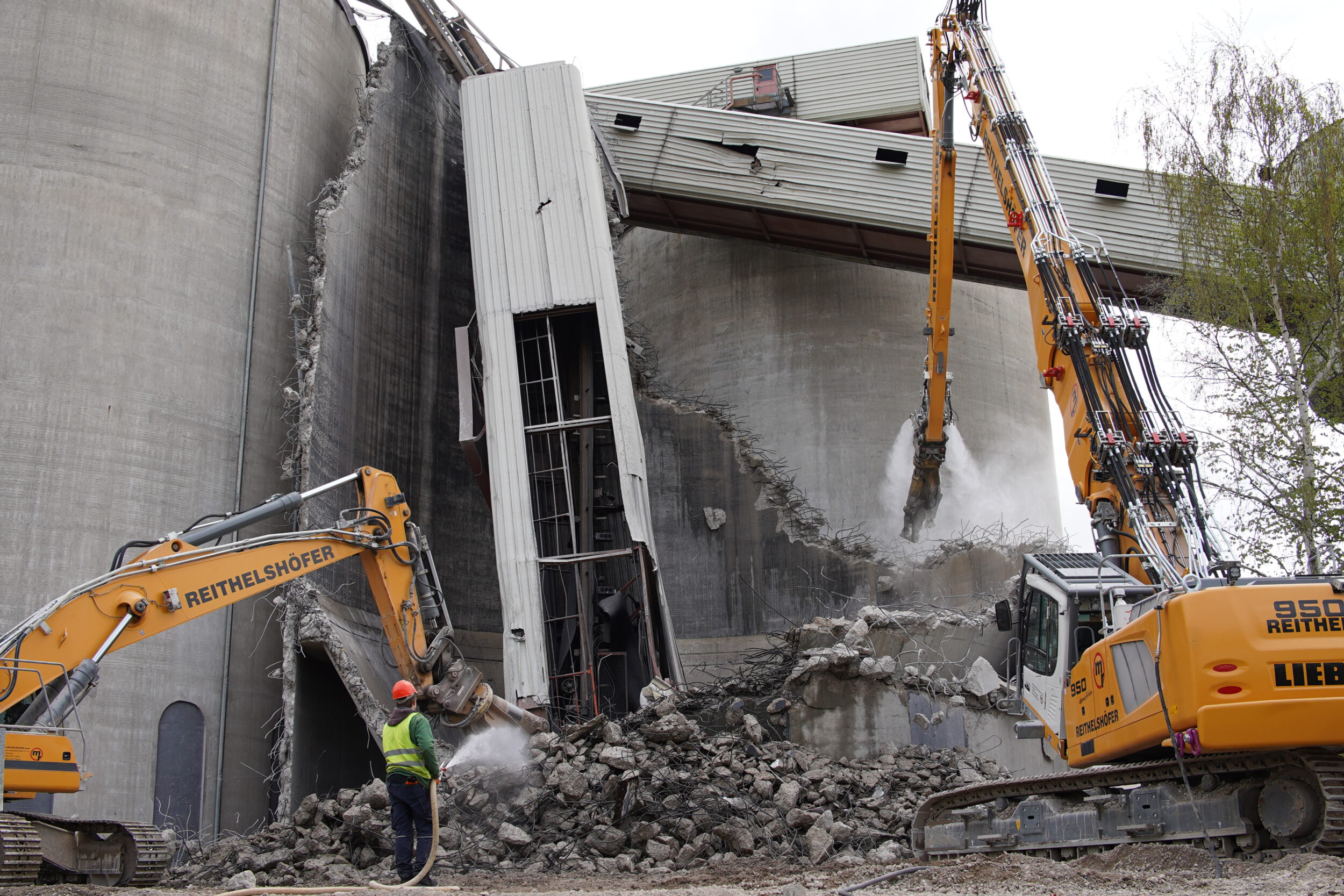
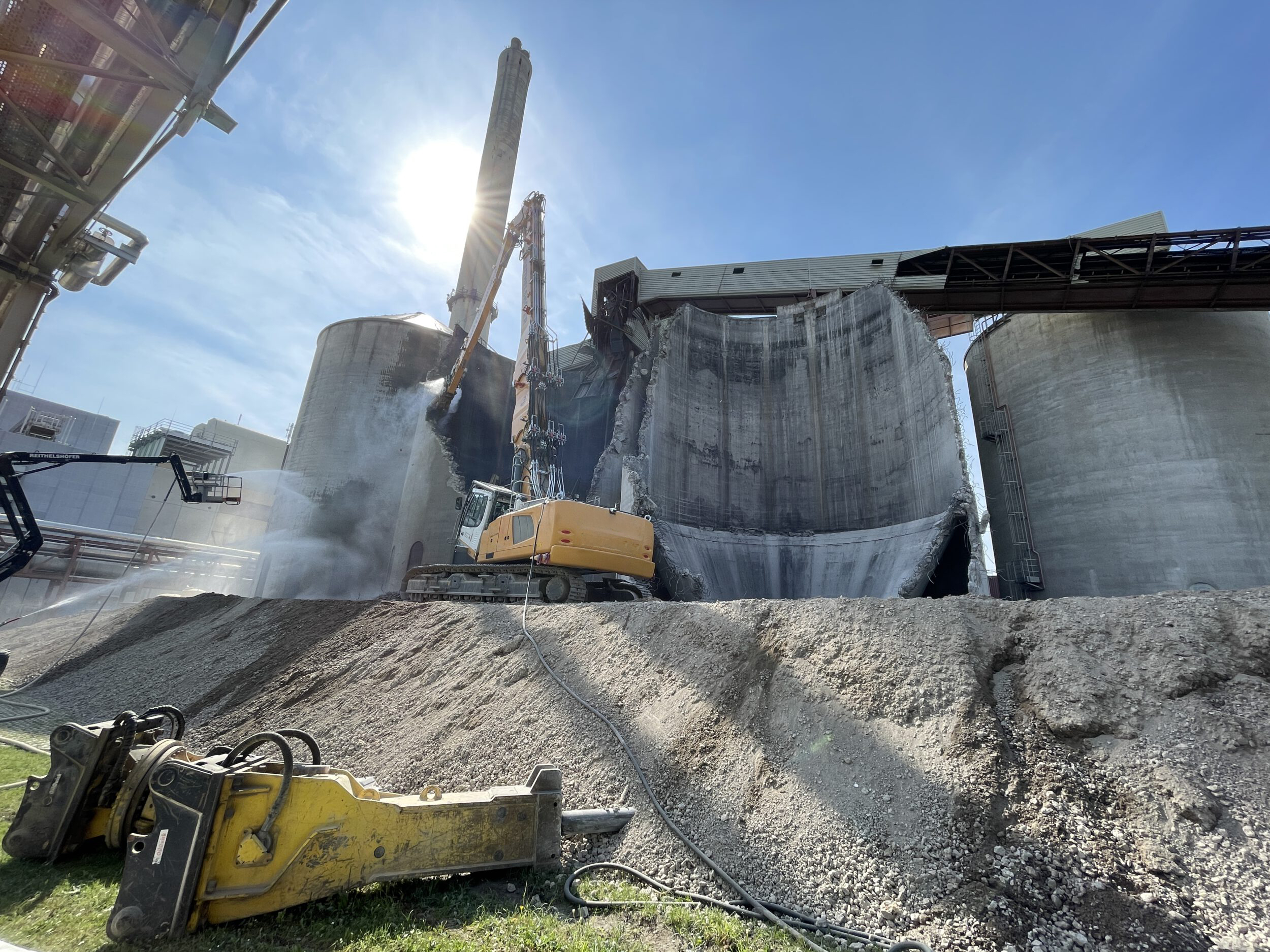
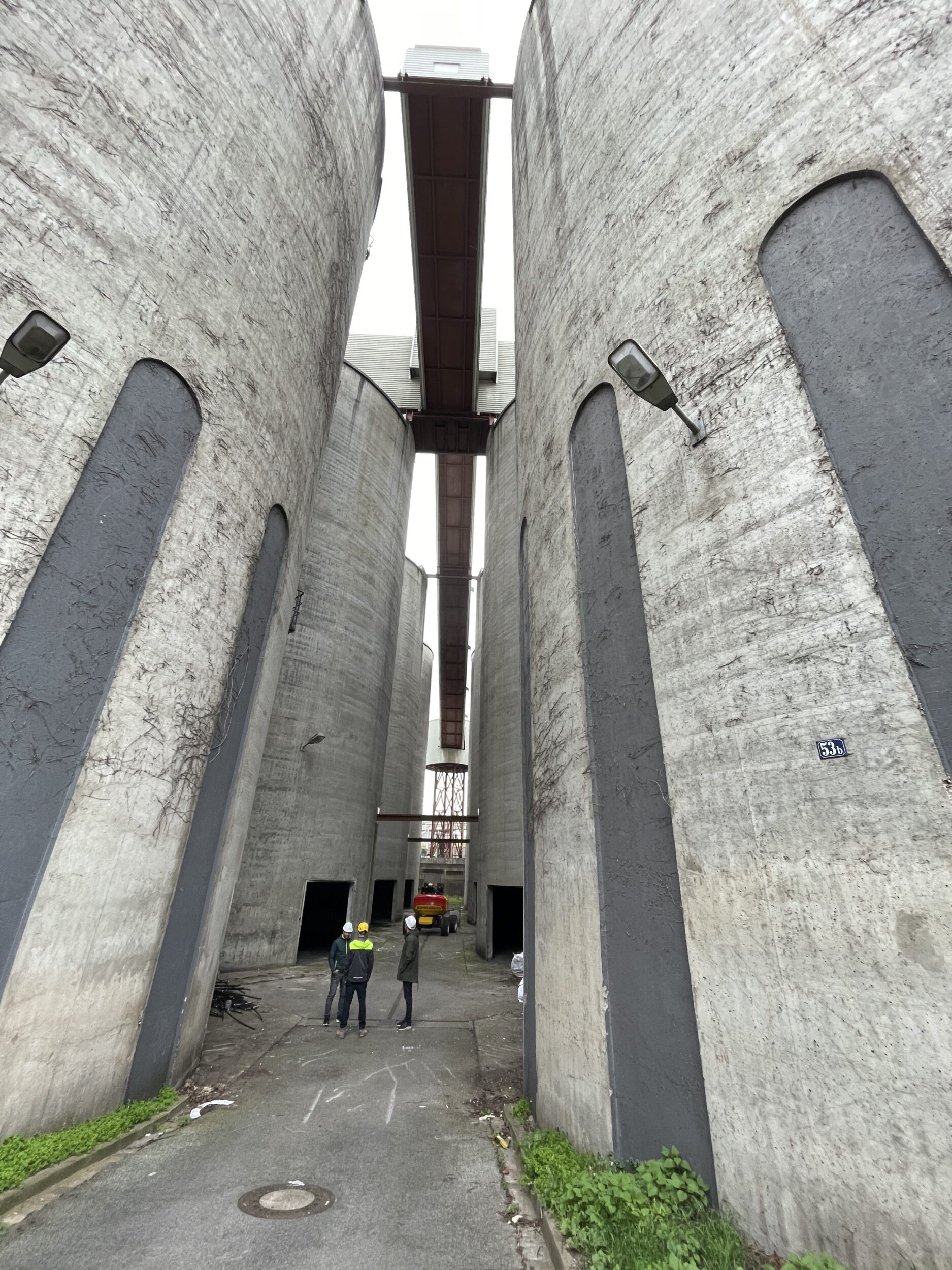
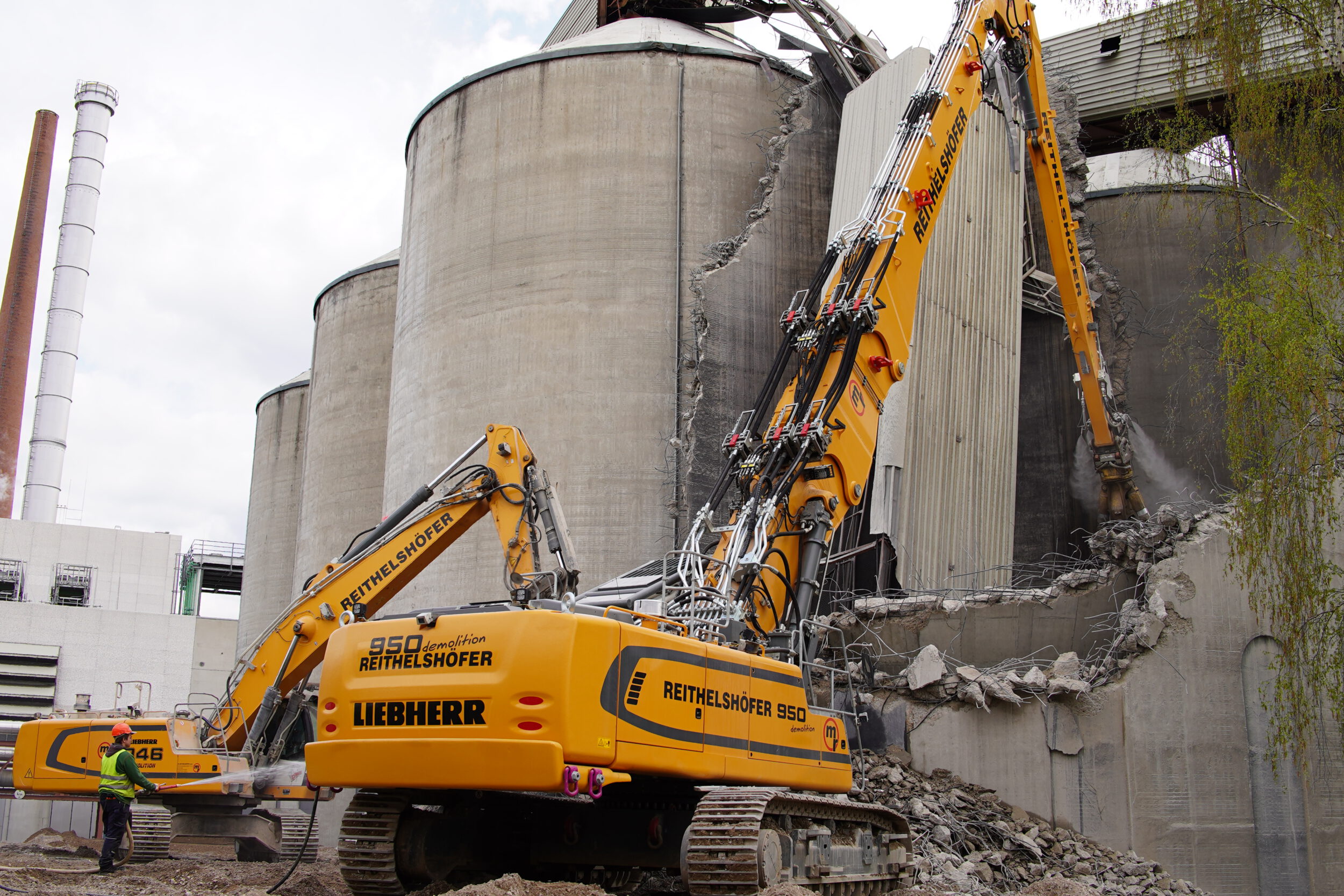
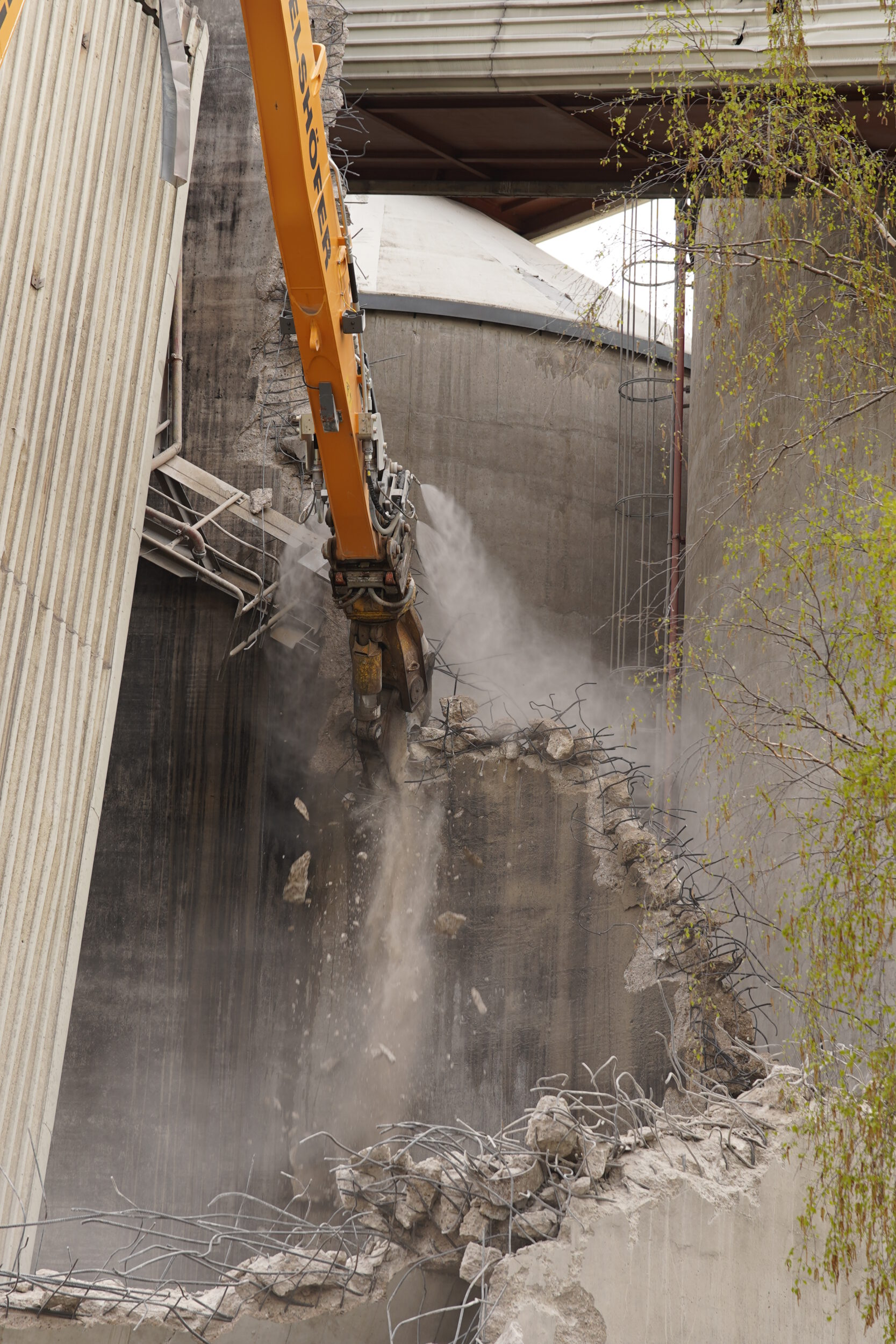
"Now they are gone. Forever. The eight distinctive coal silos that had shaped the image of the power plant site in Nuremberg-Sandreuth since 1982 are history. Nearly 20 years ago, the last coal train and the commissioning of the gas and steam turbine plant heralded the end of the coal era in Sandreuth. Now, the last visible remnants of this time have also disappeared. In recent months, two long-reach excavators worked their way through the thick walls of the eight coal silos. With their powerful claws, they also tore down the former unloading hall and the ten conveyor belts."
The story told by Silke Weiß from the N-ERGIE press team marks a turning point. Such a demolition is a complicated matter, as Fabian Ziegler and Dominik Kisskalt from LGA IUA can attest: "We accompanied the project from exploration to deconstruction," says Kisskalt. "Experience tells us that buildings from this era are likely to contain hazardous substances. This must be examined on a case-by-case basis: asbestos in paints, spacers, PAHs (polycyclic aromatic hydrocarbons) in black coatings, sealing membranes, PCBs (polychlorinated biphenyls) in joint compounds..." he lists potential hazards. Therefore, deconstruction planning begins with sampling all components suspected of containing hazardous substances. Some, like the suspicion of asbestos, could be ruled out in the laboratory through electron microscopy.
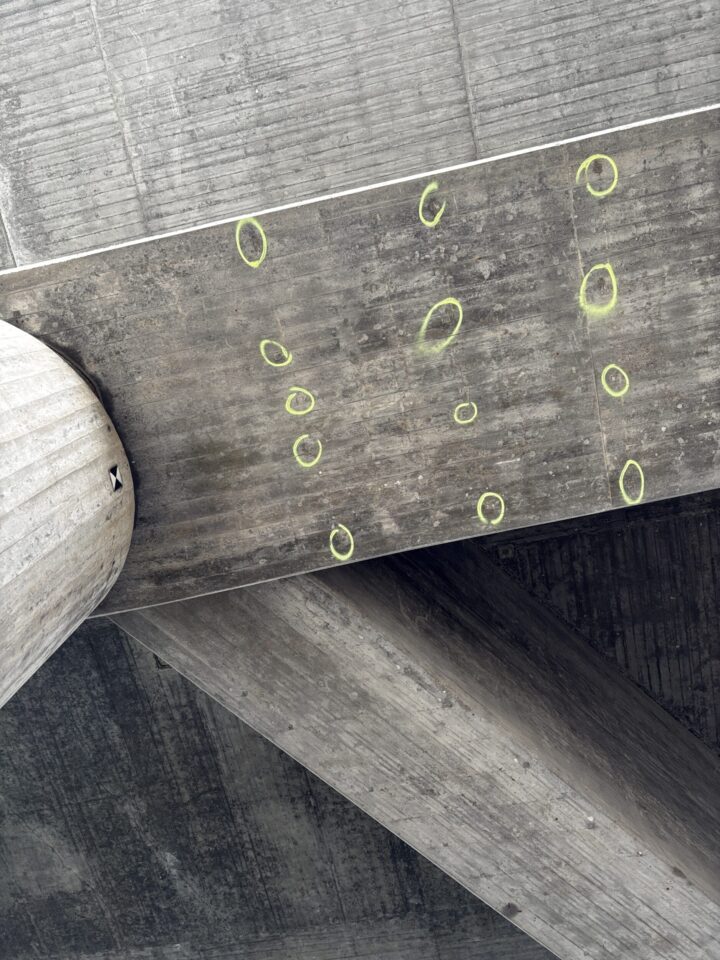
What happens to the old building material? Answering this question significantly impacts disposal costs, which vary greatly depending on whether it is ordinary construction debris or contaminated material. Core samples were taken from the building substance in several places to rule out the risk of contaminated concrete. The results of these investigations are crucial for deciding how the building mass must be disposed of, whether the concrete can be reused or needs to be specially disposed of.
The engineering deconstruction planning – essentially the reverse of new construction – must consider many other aspects. At the Sandreuth construction site, the challenges were mainly due to the special environment: The mentioned gas turbines are very sensitive to dust and vibrations. Continuous monitoring by the LGA was required. Noise and dust measurements also ensured that there were no excessive impacts on the neighboring residential areas. Particularly critical was the minimal distance (3.50 meters) to the adjacent biomass power plant. Procedures were established in close coordination with the demolition contractor to eliminate risks to employees and facilities.
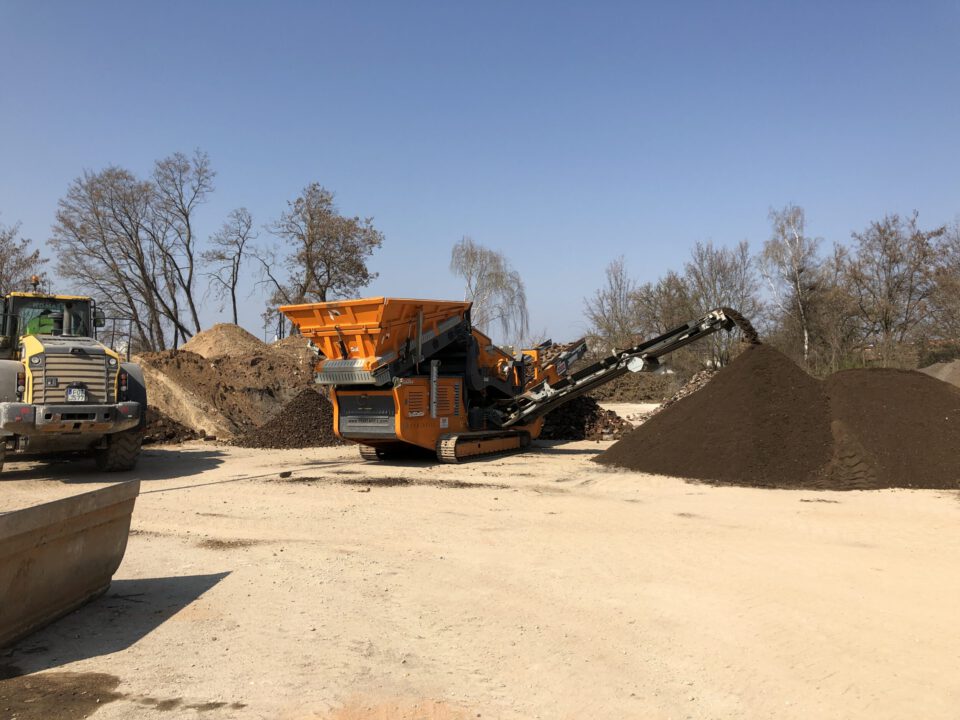
The demolition concrete was declared for further use, and the resulting construction pits were filled with certified material for the planned new building. "The newly available area could be used for the construction of the new waste wood power plant, which is currently in the approval process," N-ERGIE looks to the future.
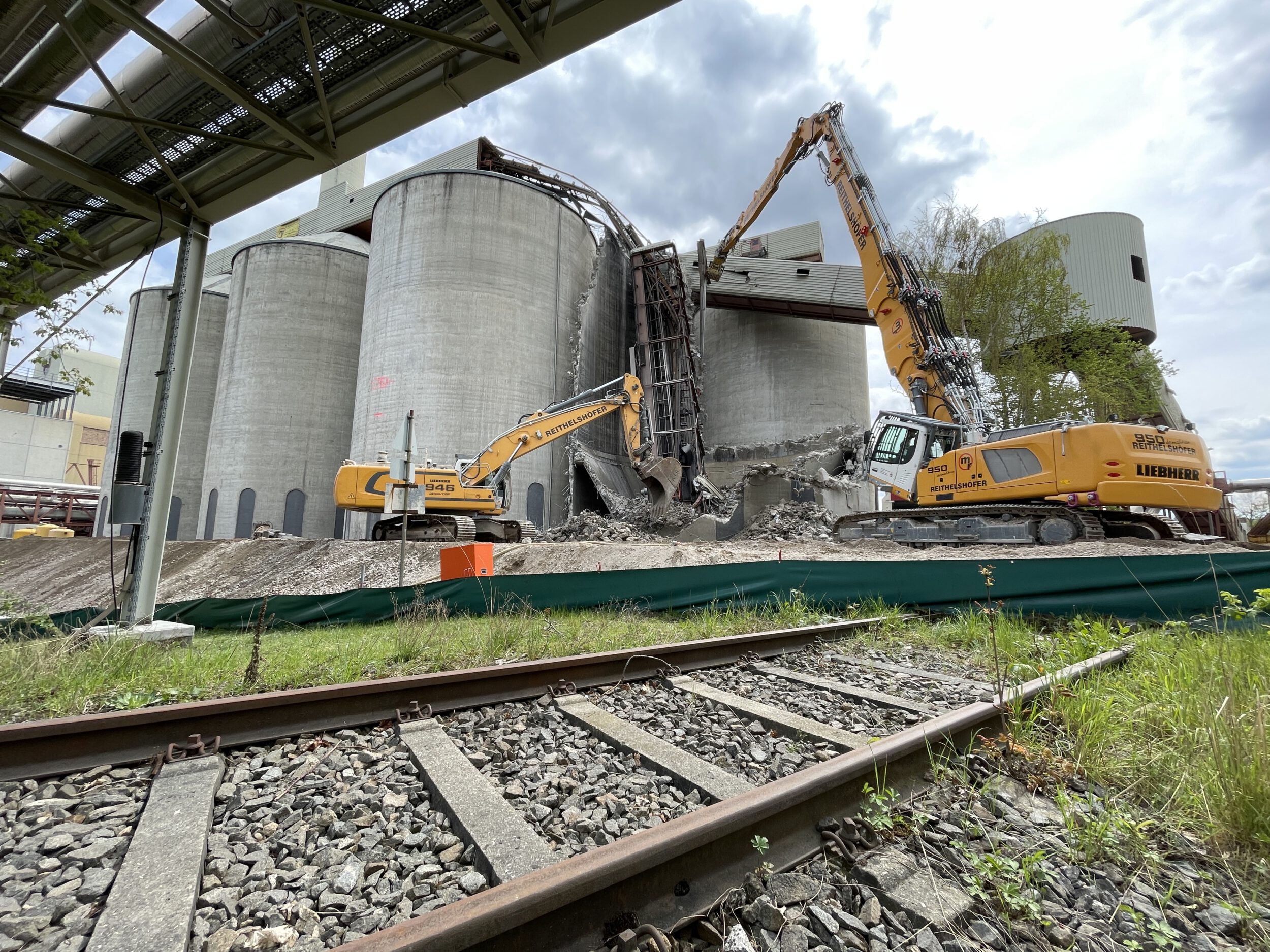
Complex Requirements: Demolition of the Coal Silos in Sandreuth